

We Tried a Visual Schedule. Here's What Actually Helped.
A flexible approach to rhythms and routines that helps your neurodivergent child feel safe, not micromanaged.

If you’re reading this, chances are you’ve got a neurodivergent kiddo - whether they’re ADHD, autistic, anxious, or navigating OCD. You’ve probably heard about visual schedules before (who hasn’t?), but maybe you haven’t found one that actually works for your family. Or maybe you tried one… and it backfired completely.
Visual schedules do have a host of benefits. They can:
offer predictability and structure
lower the demand of processing, mental overwhelm and anxiety
support with transitions and autonomy too
reduce the perceived control around their day as they remove the parent as the authority and place it onto the schedule (for PDA’ers particularly)
We are told: ND brains crave predictability - Autistic minds feel safer with regularity and routine; ADHD minds need the external structure even if they naturally oppose it; both minds benefit from low-demand processing. Yet, the nuances get lost in translations and what often What this often translates to is a relatively rigid schedule of sorts. The same routine, in the same way, at the same time - which may work for some, but for many it may lead to more burnout, stress and meltdowns than before.
→ What this post will cover:
Why visual schedules can be so helpful for ND kids
Common pitfalls and why they don’t work for every child
Prompts to help you figure out what kind of schedule your child actually needs
A peek at the visual schedule we use in our home
Plus, scroll to the bottom to grab your free downloadable visual planner template!
The Nuances: Why One Size Doesn’t Fit All
So here’s the thing I have come to learn over the years of trying different schedules and deep diving into the realm of what routine actually is for the neurodivergent mind: depending on the human, the mind, the neurodiversity that is present - this will influence what is required from a tool like a visual schedule.
As parents of neurodivergent kids - we know that one size does not fit all - yet many of our tools are framed this way!
Here’s what we’ve found:
Not every child wants or needs a hyper-detailed breakdown - too much structure can increase stress or lead to rigidity.
We’ve found with our AuDHD PDA daughter that too much detail and too much notice in advance, actually leads to heightened anxiety as she feels the need to go over and over what’s coming up and what’s required of her. I (AuDHD) get stuck in the rigidity of having too much planned out and then if we fall off track, I get stressed AF! And for some ADHD people, they get stuck in the limbo of waiting for their afternoon activities.Some kids benefit from knowing what’s first + what’s next - others want the whole picture.
Each person will have their key things they need to know, in order to feel safe and regulated. For my little kids, it’s transitions that we focus on. For my older step-son, it was knowing if we’re home or out, and what we were having for dinner.A visual schedule isn’t a behaviour control tool - it's a co-regulation support and communication bridge.
It’s a tool to support executive functioning skills, to prepare for tricky times (typically a time that places a larger demand on a child), to offer comfort and safety in knowing what to expect. It’s not a tick-list, or behaviour chart.Demand can come in many forms, and too much demand can undo the whole benefit of the schedule.
The look of the schedule matters: too "schooly" can feel oppressive for some ND kids; too specific (e.g. read a book, write a story, get dressed, eat this) can mean a PDA child feels a loss of autonomy; too much on the board can overwhelm some, and can make others feel like they have no time in their day for any chill time, or fun.
The key is knowing your child - what they need support with most, and starting there. We won’t always get it right, it won’t always be the same and also there’s opportunity here to connect and collaborate together - don’t miss this!
I’d love to hear what works (or doesn’t) in your home - do you use a visual schedule? What’s helped your ND child feel more settled in their day? Leave a comment below - I read and reply to every one.
How to Figure Out What Your Child Needs
Prompts to explore:
What parts of the day create the most tension or resistance? What parts of the day does your child need the most support with?
How does your child respond to visual input? Do they like images, icons, or words?
Do they prefer choice (e.g. picking from 3 options) or predictability (same rhythm each day)?
Have they shown interest in “what’s happening next”? Or do they seem to get overwhelmed when too much is shared at once?
Do they want to be involved in making the schedule?
Remember: you can have more than one visual planner up! We have a daily rhythm (that remains the same throughout the term), a weekly activity planner (refreshed each week), and at times we have had a learning planner, or a planner for a big transition eg when we were moving house, or going on holiday! You could even have a mini visual planner for tricky routines such as hygiene (eg bath, teeth etc)
Our Visual Schedule: What We Use & Why
Our visual schedule is pretty basic - which is done with intention, because the more basic and easier things are for me as the parent, the more capacity I have to co-regulate.
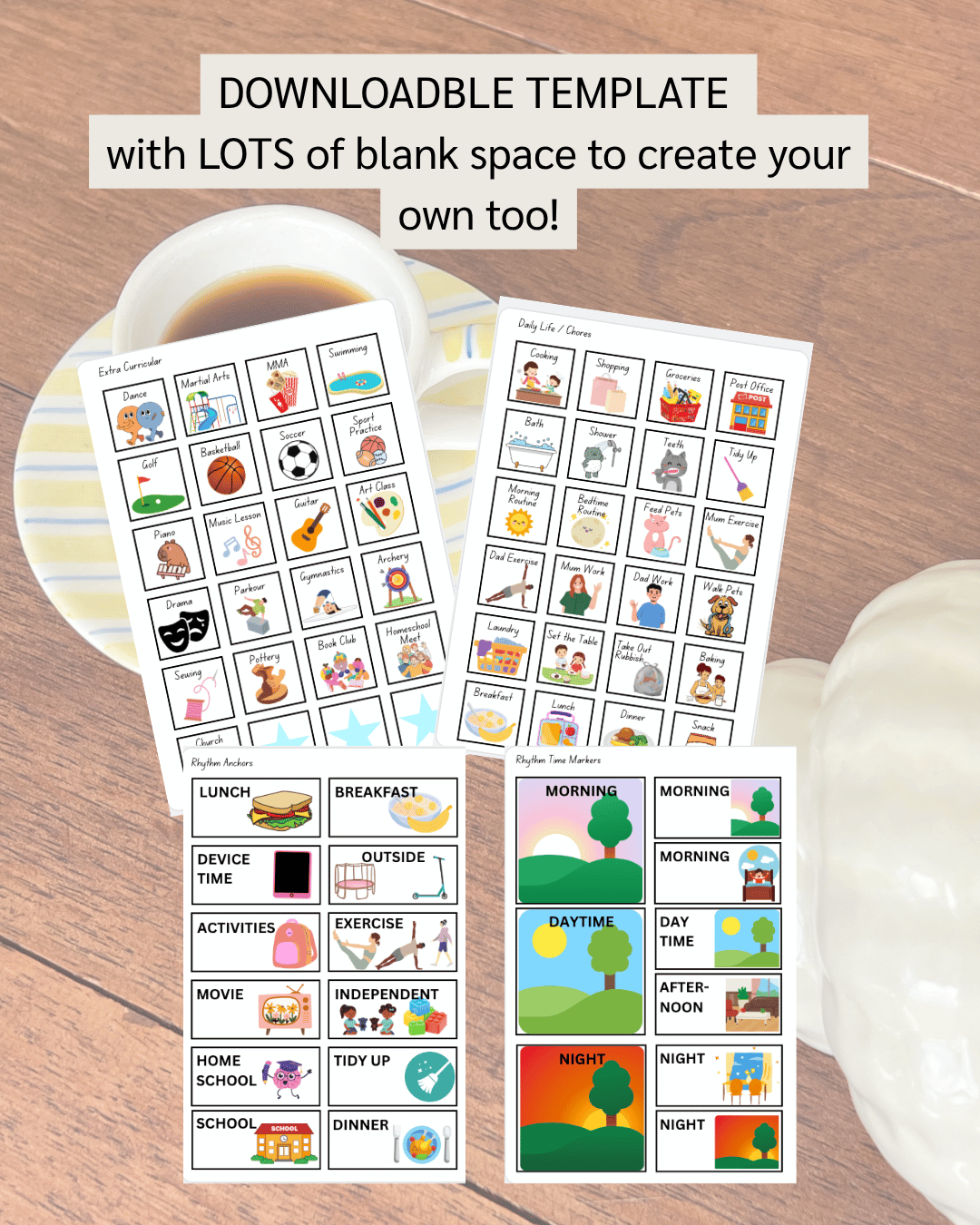
We simply have a whiteboard on the wall in the kitchen / lounge, where it’s frequented often and seen lots. I’ve printed small icons, laminated them and stuck them on using velcro dots. Super basic - super easy.
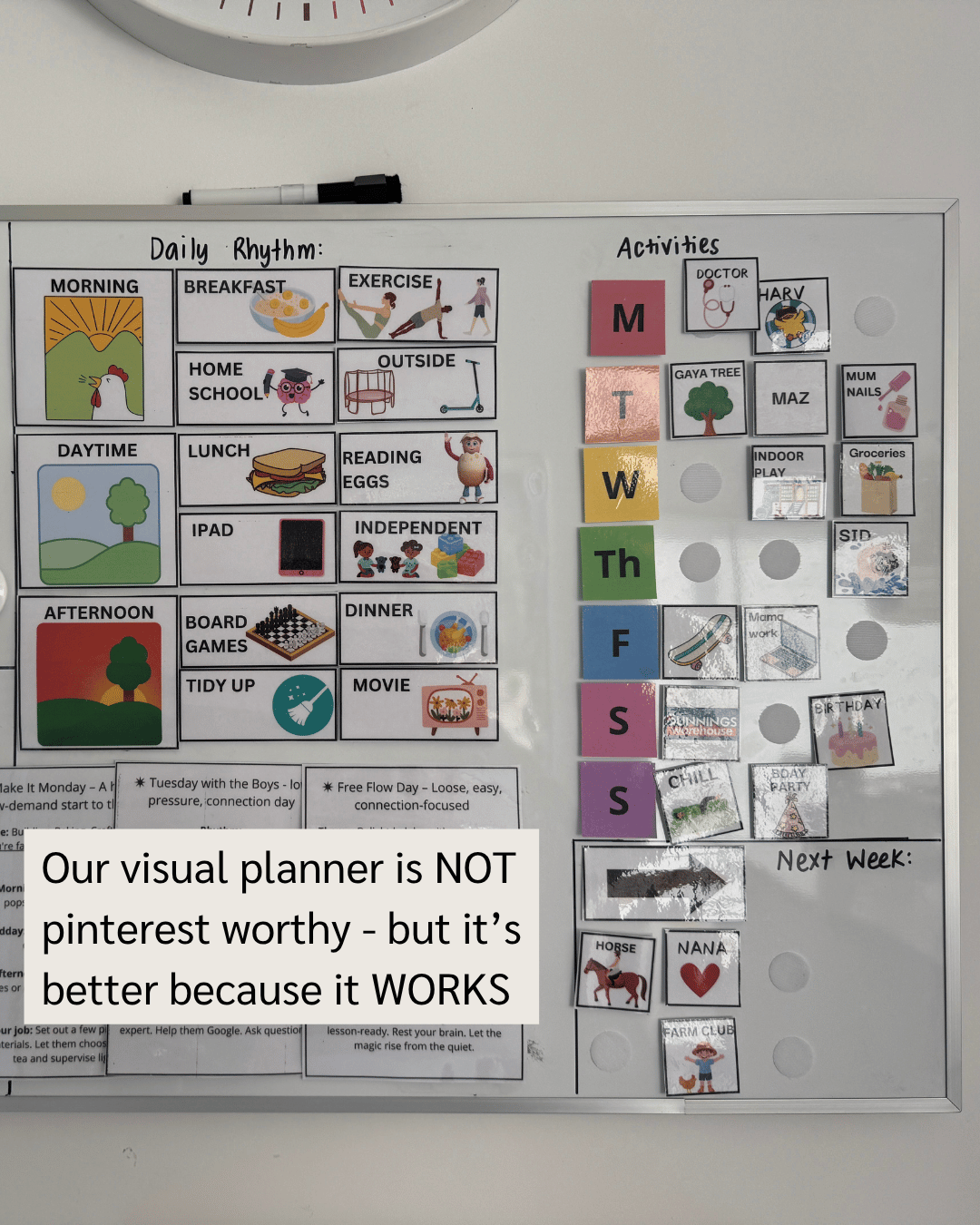
You’ll notice there’s two clear parts to our schedule.
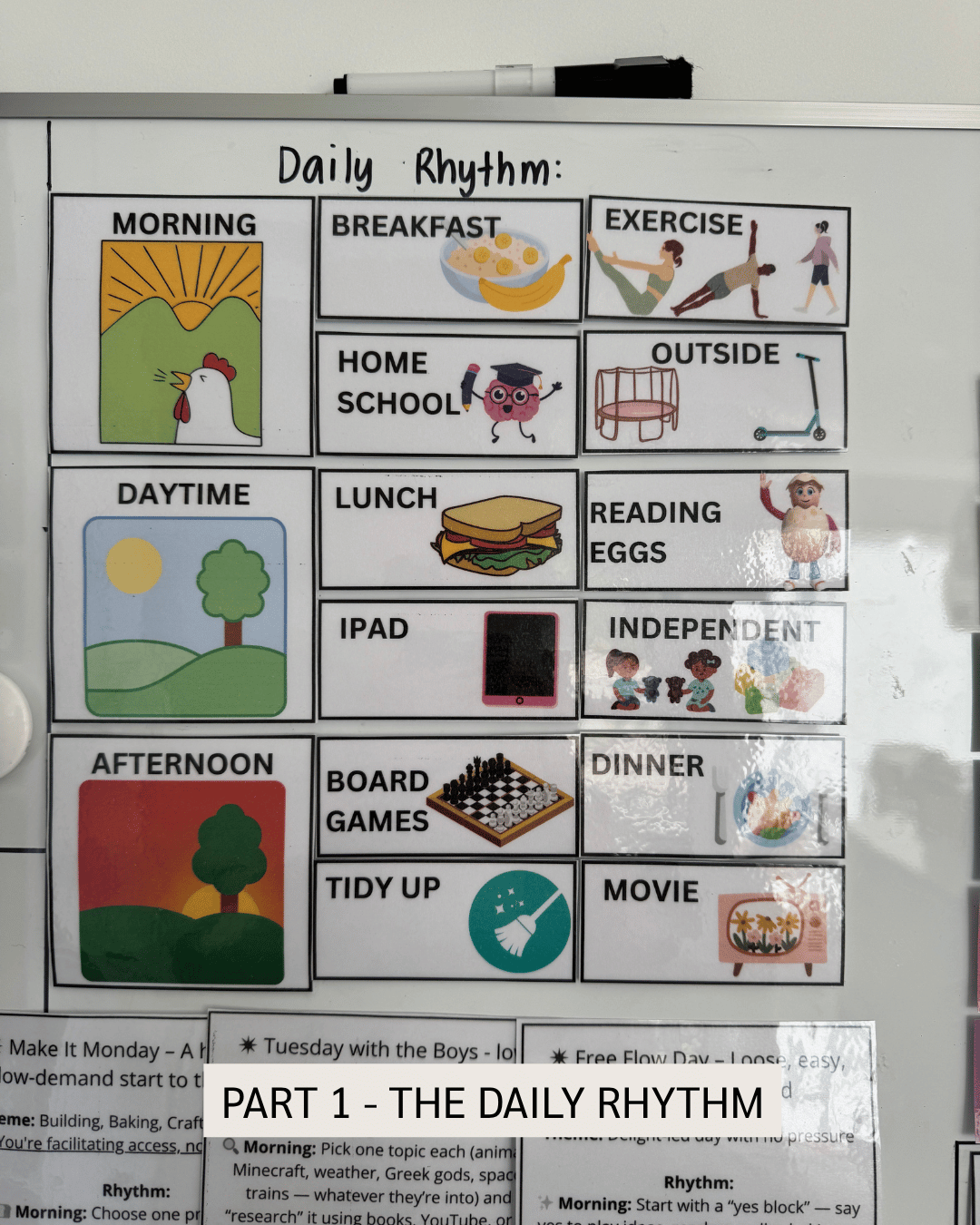
The Daily Rhythm
This is our flow of the day which is built around anchor points - the flow stays roughly the same, even when life gets messy. It’s a rhythm that can fall away as we head out and do activities, and we just pick it back up when we’re home - it’s not tied to a clock or place, just a sense of what happens in order. I’ll share more about rhythms in a later post as these are foundational to a smooth home and family!
Daily Activities
These are the specific things that change day to day; we focus on the tricky moments which are transitions for us e.g when we’re required to leave the house and engage in external social situations. I also include my own activities on here for when I need to leave the kids in care, and go and do something independently - another sticking point for my kids!
You’ll see I have a space at the bottom saying “next week” where some of the cards live, this gives my kids the subtle heads up that these are coming up - saves them asking me 1000 times “do we have gym next week?!” and also allows them to quietly prepare.
I have a bunch of these cards printed and ready to go, they live in a zip lock bag in the kitchen for easy access!
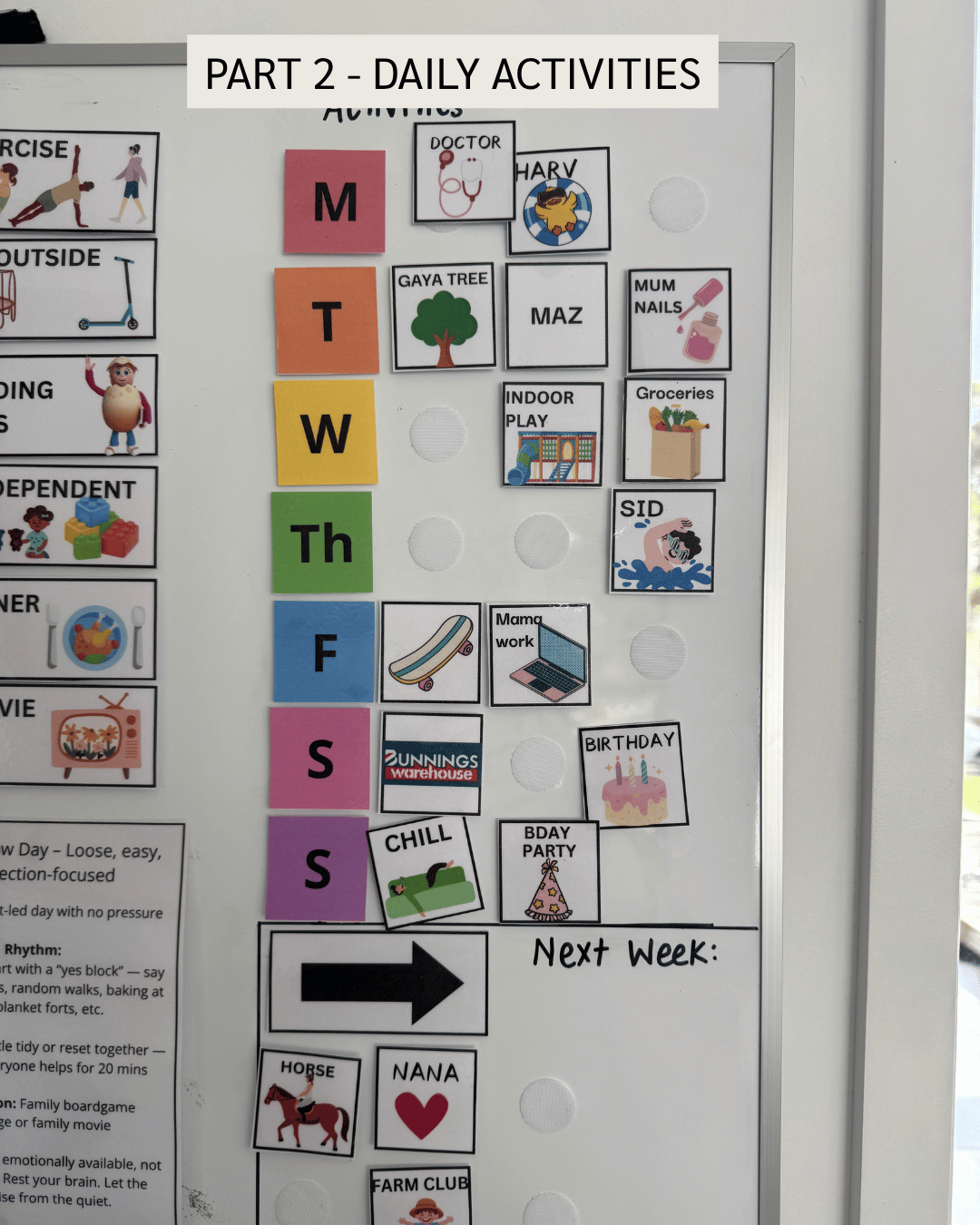
The rhythm gets re-visited and refreshed each term/season; the daily activities get refreshed on a Sunday, with the help of the kids.
We’ve found that this is the perfect blend of routine (rhythm), forward planning (next week) and transition support (daily activities) for our kids - particularly our AuDHD PDA babe.
FREE DOWNLOADS FOR SUBSCRIBERS
There are many visual schedules available on sites like Etsy, or using Canva you can easily build your own! I’ve made our one much less “my family focussed” and more global so that you can download it (free) by subscribing below!
I love this. Not enough people talk about how parents benefit from building their own version of a daily planner. Premade ones are visually stunning for sure but rarely work because they're not personalised enough for your kiddo. Even between my two (both neurodivergent) they benefit from different visuals / learning aids. Thanks for the helpful tips which I will be using for sure!